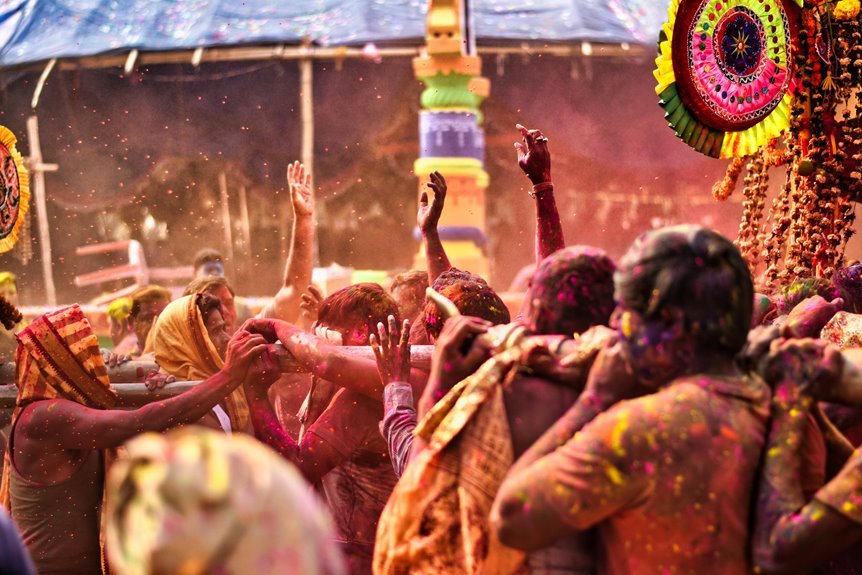
When considering whether bhang is legal in India, you encounter a tangled web of laws and cultural practices. The Narcotic Drugs and Psychotropic Substances Act of 1985 lays the groundwork, yet exceptions exist for traditional use during festivals. State regulations add to the confusion, with some states embracing bhang while others strictly prohibit it. This disparity raises important questions about personal freedoms and legal boundaries, prompting a closer look at the implications of bhang consumption today.
Understanding Bhang and Its Cultural Significance
Although bhang is often associated with recreational use, its roots run deep in Indian culture and tradition.
You’ll find that bhang plays a significant role in various cultural rituals, particularly during festivals like Holi.
Historical practices reveal its use in spiritual ceremonies, emphasizing its importance in connecting communities.
Understanding these aspects enhances your appreciation of bhang beyond mere consumption, highlighting its cultural significance.
Legal Framework Governing Bhang in India
While bhang has cultural significance, its legal status in India is complex and often misunderstood.
Legal definitions highlight bhang’s classification under the Narcotic Drugs and Psychotropic Substances Act, 1985, yet it falls under exemptions for traditional use.
Understanding this historical context clarifies its acceptance in specific regions, but ambiguity remains, creating a landscape where personal freedoms and legal restrictions often conflict.
State-wise Regulations and Variations
As you explore the legal landscape of bhang in India, you’ll find significant state-wise variations in its regulation and acceptance.
Different states impose unique state regulations, often defining consumption limits that range from permissive to restrictive.
For instance, some states allow bhang during festivals, while others maintain strict prohibitions, reflecting diverse cultural attitudes and legal frameworks surrounding this traditional cannabis product.
Implications of Bhang Consumption and Use
Understanding state-wise regulations sets the stage for examining the broader implications of bhang consumption and use in India.
You’ll find that its health effects can vary, influencing personal choices and public health discussions.
Additionally, social perceptions around bhang can shape attitudes, either promoting acceptance or stigmatization.
This complex interplay affects not only individual experiences but also community norms and policies regarding its use.
Conclusion
Navigating the legal landscape of bhang in India is like walking a tightrope; one misstep could lead to a fall into confusion. While its cultural roots run deep, the legal framework often feels like a tangled vine, with state laws varying widely. As you consider indulging in bhang, remember that understanding these nuances is crucial. Just as a skilled tightrope walker relies on balance and focus, you too must tread carefully to honor both tradition and legality.