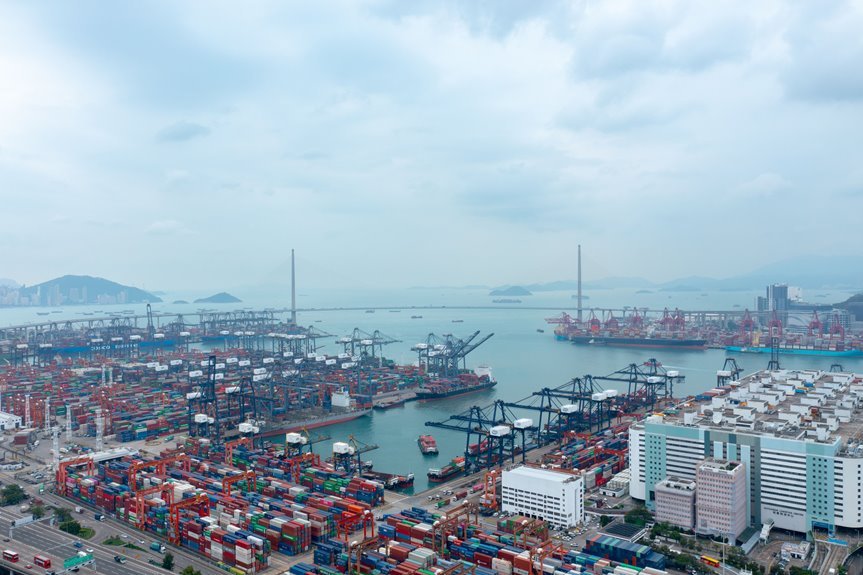
Multinational industries are like the roots of a vast tree, intertwining economies across the globe. You might wonder how these corporations not only drive growth but also reshape local markets and employment landscapes. Their strategies often pose challenges to smaller businesses, leading to wage pressures. As they adapt to sustainability demands and technological advances, the question arises: how will these shifts redefine economic interactions in the future?
What Are Multinational Industries and Their Role in Global Trade?
Multinational industries are key players in the global trade landscape, operating across multiple countries to optimize resources and expand markets.
They leverage trade agreements to enhance global supply chains, minimizing costs and maximizing efficiency.
Key Strategies Multinational Corporations Use for Success
To thrive in today’s competitive landscape, corporations must adopt a variety of key strategies that enhance their global presence and operational efficiency.
Focused global expansion allows you to tap into emerging markets, while effective market adaptation ensures your offerings resonate with local consumers.
How Multinational Corporations Impact Local Economies and Employment
While many view multinational corporations as engines of economic growth, their influence on local economies and employment is complex and multifaceted.
These corporations can reshape local market dynamics, often creating diverse employment opportunities. However, they may also lead to wage suppression and job displacement, challenging local businesses.
Understanding this balance is crucial for communities aiming to harness multinational presence for sustainable economic development.
Future Trends in Multinational Industries Shaping the Economy
As global markets evolve, understanding future trends in multinational industries is essential for anticipating their impact on the economy.
You’ll see a rise in sustainability practices and technological innovations driving efficiency and reducing environmental footprints.
Companies that adapt to these changes won’t only enhance their competitiveness but also contribute positively to global economic stability, aligning with consumer preferences for responsible business practices.
Conclusion
Multinational industries act like a double-edged sword in the global economy. While they drive growth and create jobs, they can also challenge local businesses and suppress wages. As these corporations embrace sustainability and technology, they adapt to shifting consumer preferences, influencing market dynamics. By understanding their complex role, you can better grasp how these industries not only shape economies but also impact your everyday life. The balance between growth and local welfare remains crucial for future economic stability.